Salt Air and Sand: Why Cape Cod ACs and Water Heaters Fail (And How to Spot the Signs)
Living on the Cape means dealing with unique environmental factors that regular mainland appliances never have to face. Between the corrosive salt air, high summer humidity, and the sudden influx of seasonal guests putting a strain on your plumbing, our local heating, cooling, and water systems work double-time.
Because these systems often work hardest during the humid summer months, they tend to experience issues right when you need them most. Catching these problems early can save you from an expensive mid-summer breakdown.
1. Salt Air Corrosion vs. Your AC Coils
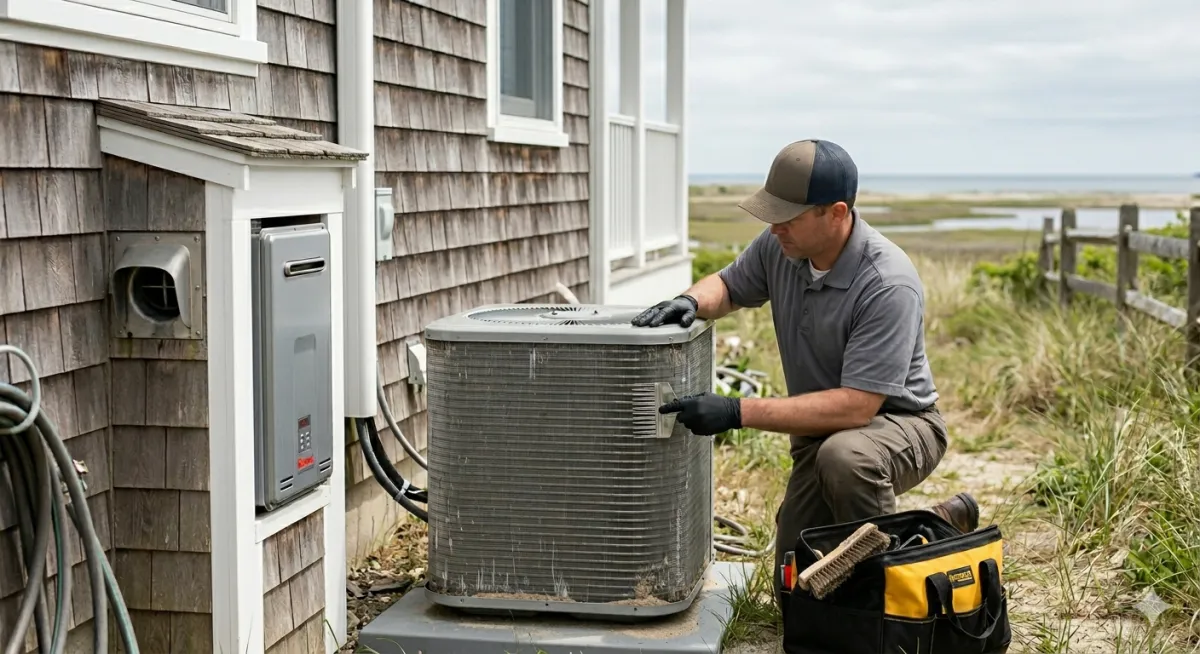
The very thing we love about Cape Cod—the ocean breeze—is the number one enemy of your outdoor air conditioning unit. Salt air accelerates the corrosion of the delicate aluminum fins and copper coils inside your AC condenser.
What to look for: Flaking metal, a white powdery residue on the outdoor unit, or a sudden drop in cooling efficiency. If your system is blowing lukewarm air, the salt air may have already eaten through a coil, causing a refrigerant leak.
The Risk: Corroded coils make your system work twice as hard to cool your home, driving up your Eversource bills and shortening the lifespan of your unit.
2. Strange Noises (Bangs, Rumbles, and Screeches)
Your home comfort systems should operate quietly in the background. If they start making their presence known via loud noises, it’s a clear warning sign.
For your AC: Squealing or screeching usually points to a slipped blower belt or failing motor bearings, often exacerbated by fine coastal sand finding its way into moving parts.
For your Water Heater: If you hear a popping or rumbling sound, it’s a classic sign of sediment and mineral buildup. Over time, minerals settle at the bottom of the tank. The noise is actually boiling water trapping steam beneath that heavy layer of crust.
3. The Seasonal Strain: Lukewarm Water and Weak Airflow
On Cape Cod, many homes transition from being empty or lightly occupied to hosting large families and vacationers overnight. This sudden surge in demand is usually when a weakening water heater or AC decides to quit.
+------------------------------------+------------------------------------+
| If your AC has weak airflow: | If your Water Heater runs cold: |
+------------------------------------+------------------------------------+
| It’s often a clogged air filter | If your hot water cuts out halfway |
| from dust and pollen, or frozen | through a shower, a heating |
| evaporator coils. Coastal humidity | element might be burnt out, or the |
| makes it harder for a struggling | tank simply cannot keep up with |
| AC to remove moisture from the air.| the increased seasonal demand. |
+------------------------------------+------------------------------------+
4. Pooling Water or Rusty Leaks
Water where it shouldn't be is an immediate red flag for both systems.
AC Condensate Leaks: High humidity means your AC pulls gallons of water out of the air every day. If the condensate drain line gets clogged with algae or debris, that water will back up, leading to pooling around your indoor unit and potential drywall damage.
Water Heater Rust: If you notice a puddle beneath your water heater, check the source. A leak from the top might just be a loose valve, but rust-colored water pooling at the base usually means the internal tank has corroded through—a common issue on the coast that requires a swift replacement.
Proactive Coastal Maintenance
The secret to avoiding a total system collapse during the peak of summer or the dead of winter is proactive maintenance. Regularly replacing your AC filters, washing down your outdoor condenser unit to remove salt crust (always turn the power off first!), and having a licensed Cape Cod HVAC technician flush your water heater annually will extend the lifespan of your investments and keep your home comfortable all year long.
